
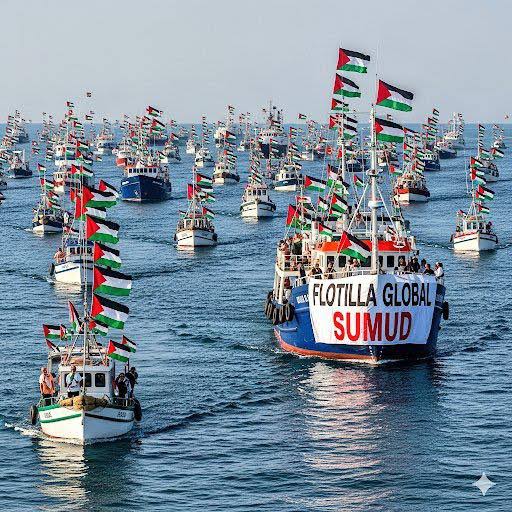
 Leggo e ascolto, attingendole da varie fonti, opinioni molto contrastanti sulla navigazione della Flotilla verso le coste di Gaza. Opinioni anche molto autorevoli, nonché spesso espresse in modo riflessivo e stimolante. Di persone che stimo. Dunque, da tenere in debita considerazione, sebbene diverse e talvolta diametralmente opposte. E talune, ovviamente, che non condivido.
Com’è possibile, mi viene da chiedermi, tanta difformità di visioni della situazione medio-orientale?
E non dico, appunto, tra i contendenti, tra chi si schiera ideologicamente, tra chi ci trova o spera di trovarci convenienza, e chi vuole colpire dei nemici: palle al balzo o semplicemente pregiudizi. No, parlo di chi appare in buona fede e inoltre conosce le cose di quei territori: storici, politici navigati, gente di mondo non solo perché ha fatto il militare a Cuneo.
E mi stupisce, soprattutto, il fatto che sebbene i piani del discorso siano molteplici ed intrecciati, non dovrebbe esser difficile individuare delle priorità: umane, etiche, logiche, su cui fondare una convinzione, prendere una posizione. Dovrebbe accadere in presenza di uno sterminio, quale quello a cui stiamo assistendo.
Ma così non è. O meglio, non accade. E su quei piani intrecciati si finisce col fare grande confusione, che in definitiva determina irrimediabilmente (come sovente oggi per tanti argomenti) il raggruppamento sotto due distinte bandiere, senza se e senza ma. “Divisi e suddivisi a schiere opposte”, avrebbe detto il Poeta.
Così, chi insorge contro il Massacro di Gaza diventa, ipso facto, filo palestinese, o come oggi si dice Propal e quindi viene sospettato di aderire a quella corrente di pensiero e sopratutto a quell’area politica che in Italia appartiene storicamente alla Sinistra; mentre, se ricordi che vi è stato un 7 ottobre e che oggi esiste Hamas (figlia di altri terroristi arrivati dopo le Intifade) sei appartenente, o per lo meno simpatizzante (per dirla col noto termine di Mussolini), alla plutocrazia demo-pluto-giudaico-massonica.
La storia si ripete in queste ore per le ultime miglia della navigazione della Flotilla.
In grande maggioranza hanno deciso di non accettare le proposte di mediazione, nemmeno la più autorevole e indipendente giunta dal Patriarcato Latino di Gerusalemme, e di andare avanti fino alla meta prefissata.
Critiche piovute in modo torrenziale, così come lo sono state le dichiarazioni a sostegno, accompagnate da un’indignazione che non è stata risparmiata nei confronti di tutti coloro che, espressamente o nel silenzio, non erano allineati a questa scelta.
E allora, chi ha ragione?
A mio avviso, potrebbero avercela entrambi.
Personalmente, sono decisamente schierato per chi vorrebbe opporsi allo sterminio (ecco: così nessuno s’impicca alle parole e non c’è bisogno di dire se è genocidio o non lo è), che da tempo è andato al di là del bene e del male. E che è, semplicemente, intollerabile. E nessun uomo di buona volontà e buona fede, dovrebbe poter affermare il contrario. Ma il dovuto consenso termina su questo punto e più non va oltre. Poi dominano, come ho già detto, letture molto diverse: delle cause prossime e remote; delle responsabilità tra i due contendenti e, all’interno di ciascun fronte, con tutti i distinguo del caso, tra palestinesi, appartenenti a Hamas, fiancheggiatori, finanziatori locali e stranieri, ecc., e dall’altra parte tra Netanyahu, Stato di Israele, ebrei, sionisti.
Io mi sono convinto che, al di là delle situazioni oggettive, di quanto sta accadendo realmente, a fare (non dico per lo più ma dico molta) differenza c’è un diverso approccio soggettivo. Tra chi è pragmatico e chi è idealista.
Mettiamo appunto la spedizione della Flotilla.
A guardarla realisticamente e sul piano (meramente) pratico, non sarebbe sbagliato individuarne i limiti. Fornitura di viveri a bordo di barche a vela che a stento riescono a far carico per il proprio equipaggio; forzatura di un blocco militare attivo (dubiterei che è legittimo, ma cosa c’è di legittimo in una guerra, di solito?) che non è stato posto alla carlona ma da gente (Netanyahu Stato di Israele ebrei sionisti: pescate voi dal cesto) che sa fare la guerra e non definirei piena di scrupoli, sicché qualora lo avesse ritenuto per sé utile (e fortunatamente non lo ritiene in questa contingenza) non avrebbe avuto riserve a usare le maniere forti; provocazione forte (bene o male che sia) verso lo Stato di Israele per l’ampiezza delle rappresentanze nazionali dei partecipi alla spedizione, che suona come una condanna mondiale; il pericolo della compromissione del lavoro delle diplomazie; e altro, altro ancora che di sicuro si potrebbe elencare.
Poi ci sono gli idealisti.
Coloro che non guardano alla realtà concreta ma cercano nelle cose, come nella vita, ulteriore senso oltre quello materiale, credono nel valore simbolico delle azioni, e sono convinti – altrimenti che idealisti sarebbero! – che l’idealità può indirizzare la realtà.
Cosa leggono costoro nella spedizione-missione (anche questo secondo termine, se ci fate caso, è idealistico) verso Gaza?
Una grande ricchezza di simboli. Parte dei quali sta proprio nelle cose che i pragmatici vedono, ma con occhiali diversi: la provocazione che sa farsi atto di libertà ed eroismo; portare il pane, che è farsi solidali con l’Altro; indicare la Via. Soprattutto questo: dire al mondo che la Via che si cerca è probabilmente quella che si potrà trovare.
Nel mio cuore ho preso posizione. E forse potete intuirla. Ma non posso illudermi, in nessun caso, che tutti la pensino allo stesso modo. Al contrario, credo che ogni passo, anche il più piccolo, verso il miglioramento, cammini su questa strada (irta e faticosa quanto si vuole): quella che tiene sempre conto di un diverso punto di vista.
Pragmatici e idealisti forse non hanno bisogno di scontrarsi. Semplicemente di comprendersi.
***
Pragmatists and Idealists
(At the tip of the pen on the Flotilla)
I read and listen, drawing from various sources, to very contrasting opinions about the Flotilla’s voyage towards the coasts of Gaza. Opinions that are also very authoritative, often expressed in a thoughtful and stimulating way. By people I respect. Therefore, to be taken into due consideration, even if different and at times diametrically opposed. And some, of course, that I do not share.
How is it possible, I ask myself, that there is such a divergence of views about the Middle Eastern situation?
And I don’t mean, of course, among the contenders, among those who take an ideological stance, those who find—or hope to find—advantage in it, and those who wish to strike enemies: taking shots as they come or simply out of prejudice. No, I am talking about those who seem to be in good faith and, moreover, actually know something about those lands: historians, seasoned politicians, worldly people not just because they served in the army in Cuneo.
And I am above all astonished by the fact that, although the levels of discourse are multiple and intertwined, it should not be difficult to identify priorities: human, ethical, logical, on which to build a conviction, to take a position. That should happen in the presence of an extermination, such as the one we are witnessing.
But that is not the case. Or rather, it doesn’t happen. And on those intertwined levels one ends up creating great confusion, which ultimately leads irrevocably (as so often today with so many topics) to being grouped under two distinct banners, no ifs and no buts. “Divided and subdivided into opposing ranks,” as the Poet would have said.
Thus, those who rise up against the Massacre of Gaza become, ipso facto, pro-Palestinian, or as it is said today, “Propal,” and therefore are suspected of adhering to that line of thought and above all to that political area which in Italy has historically belonged to the Left; whereas, if you recall that there was an October 7th and that today Hamas exists (daughter of other terrorists who came after the Intifadas), then you belong, or at least are a sympathizer (to use Mussolini’s well-known term), of the demo-pluto-Judaeo-Masonic plutocracy.
History repeats itself in these very hours with the final miles of the Flotilla’s voyage.
By a large majority they have decided not to accept the proposals of mediation, not even the most authoritative and independent one that came from the Latin Patriarchate of Jerusalem, and to go forward until the predetermined destination.
Criticism has poured down torrentially, just as statements of support have poured down, accompanied by indignation that has not spared anyone who, explicitly or in silence, was not aligned with this choice.
And so, who is right?
In my opinion, both might be.
Personally, I am decidedly aligned with those who wish to oppose the extermination (there: in this way no one gets hung up on words and there is no need to say whether it is genocide or not), which for some time now has gone beyond good and evil. And which is, quite simply, intolerable. And no man of good will and good faith should be able to state otherwise. But due consensus ends at this point and goes no further. Then, as I have already said, very different interpretations dominate: of the proximate and remote causes; of the responsibilities between the two contenders and, within each front, with all the necessary distinctions, among Palestinians, members of Hamas, collaborators, local and foreign financiers, etc.; and on the other side, among Netanyahu, the State of Israel, Jews, Zionists.
I have become convinced that, beyond the objective situations, beyond what is actually happening, what makes (not always most, but much of) the difference is a different subjective approach. Between those who are pragmatic and those who are idealistic.
Let us take, indeed, the Flotilla expedition.
Looking at it realistically and on the (merely) practical level, it would not be wrong to identify its limits. Supply of provisions on board sailing boats that barely manage to load enough for their own crews; breaking through an active military blockade (I would doubt its legitimacy, but what is ever legitimate in a war, usually?) that was not set up carelessly but by people (Netanyahu, the State of Israel, Jews, Zionists—pick your term from the basket) who know how to wage war and whom I would not describe as full of scruples, such that if they had deemed it useful for themselves (and fortunately they do not deem it so in this contingency) they would have had no reservations in using force; a strong provocation (for better or for worse) against the State of Israel, given the breadth of national representation among the participants in the expedition, which sounds like a worldwide condemnation; the danger of compromising the work of diplomacy; and more, much more could surely be listed.
Then there are the idealists.
Those who do not look at concrete reality but seek in things, as in life, a further meaning beyond the material one, who believe in the symbolic value of actions, and who are convinced—otherwise they would not be idealists!—that ideals can direct reality.
What do such people read in the expedition-mission (this second word too, if you notice, is idealistic) towards Gaza?
A great wealth of symbols. Some of which lie precisely in the things that pragmatists see, but through different lenses: the provocation that becomes an act of freedom and heroism; bringing bread, which becomes solidarity with the Other; pointing to the Way. Above all this: telling the world that the Way being sought is probably the one that can be found.
In my heart I have taken a side. And perhaps you can guess it. But I cannot delude myself, in any case, that everyone thinks the same way. On the contrary, I believe that every step, even the smallest, toward improvement, walks along this road (steep and arduous though it may be): the one that always takes into account a different point of view.
Pragmatists and idealists perhaps do not need to clash. Simply to understand each other.
